Agentic AI versus RPA: why RPA projects stall and what takes their place
RPA works as long as the process is perfectly predictable. The moment an exception shows up, it stalls. Agentic AI is about the opposite: context, reasoning and escalation.
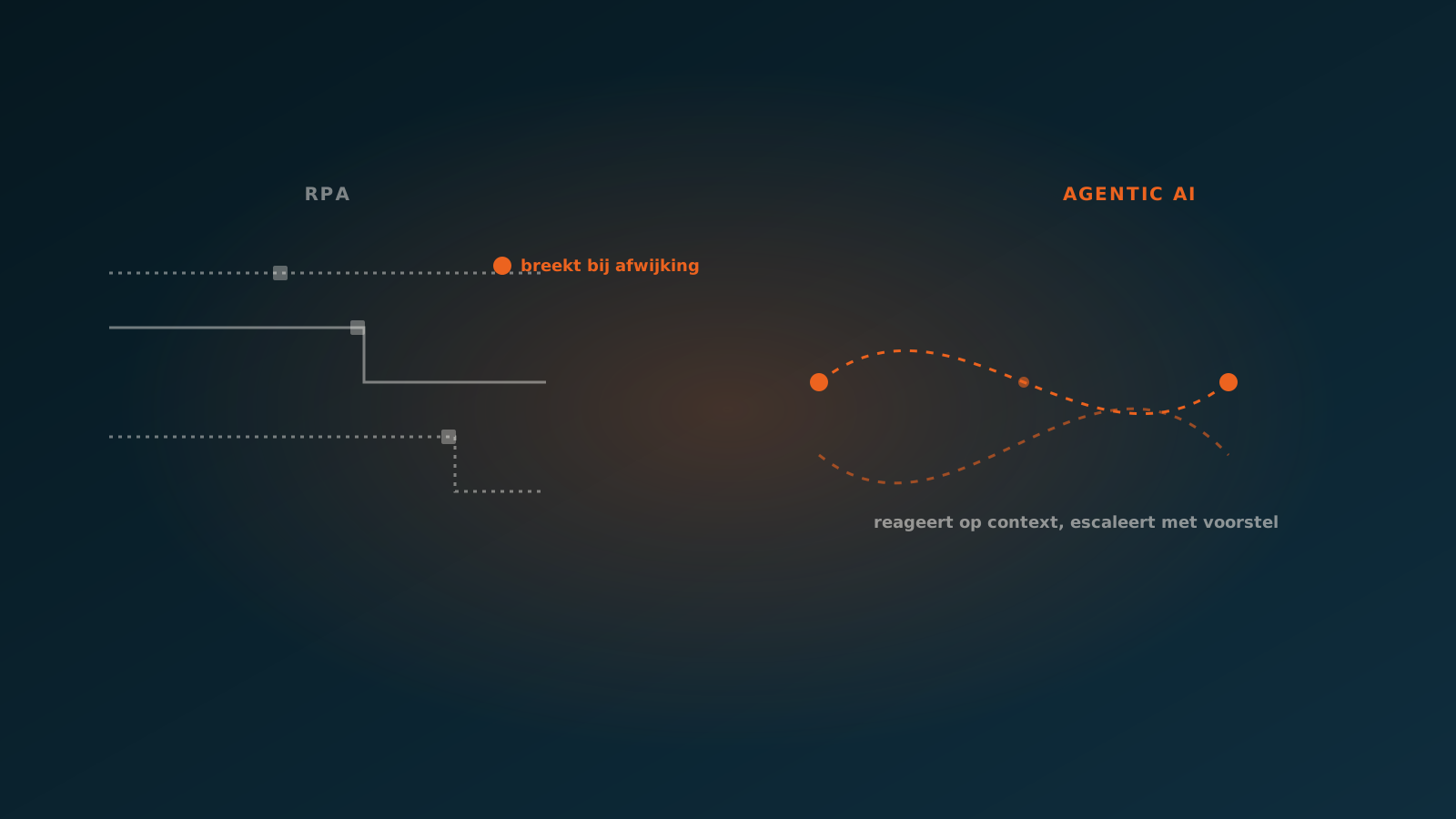
What RPA delivered, and where it stalled
Between 2015 and 2023 hundreds of RPA projects ran in the Netherlands, from UiPath to Blue Prism to Automation Anywhere. The core idea works: give a software bot a click path, let it run that at scale, and repetitive work disappears. For narrowly scoped, stable processes it was a logical step.
Anyone who's been running RPA for more than eighteen months also knows the downside. Any UI change breaks the bot. Any deviating input throws it off track. Maintaining an RPA estate becomes heavier than building it. And structural exceptions (an invoice without PO, a customer named slightly differently, a price deviation) remain human work, because an RPA bot has no understanding of context.
What agentic AI does differently
An agent isn't an advanced bot. It's architecturally different. Where an RPA bot follows a click path, an agent looks at what comes in, understands the problem, and then decides which steps are needed. When it gets an invoice with a deviation, it can weigh that deviation against supplier history, pricing agreements and margins, and decide whether to proceed autonomously or escalate.
That difference isn't an accent, it's a different architecture. Three things run counter to the RPA logic:
- Context. An AI coworker reasons about the specific case, not a generic playbook.
- Resilience. A change in layout or format doesn't break the flow; the agent adapts.
- Escalation with a proposal. Under doubt, work doesn't stop; it escalates with context and a proposed action to the right person.
When RPA is still fine
Not every process needs agentic AI. Fully predictable, stable flows with one input format and one outcome map nicely onto RPA. Think of data syncs between two systems where the fields line up every time. That's legitimate work for a bot.
The rule of thumb we use in practice: if your process has more than ten percent exceptions, more than three input sources, or more than two decision points per case, RPA breaks down and agentic AI is the better fit.
Migration path: from RPA script to AI coworker
Many of our first conversations start with a stalled RPA bot. One recent customer had three RPA robots running for inbound orders; it worked for one channel, not the other three. Six weeks later we had the whole flow running on one AI coworker, with better numbers across all channels and no more click-path maintenance. The RPA license was dropped; the operational team's experience stayed leading in the design.
Where to start if you're on RPA today
Pick one process your team knows the RPA bot keeps breaking on. Run a Quick Scan on it. We'll assess whether agentic AI is the more robust answer and, if so, what steps you need to migrate without stalling the operation in the meantime.
Curious what an AI coworker can do for your process?
Book a no-strings Quick Scan and explore the options.
Book a Quick Scan