AI coworker in SAP S/4HANA: native integration via BAPI and OData
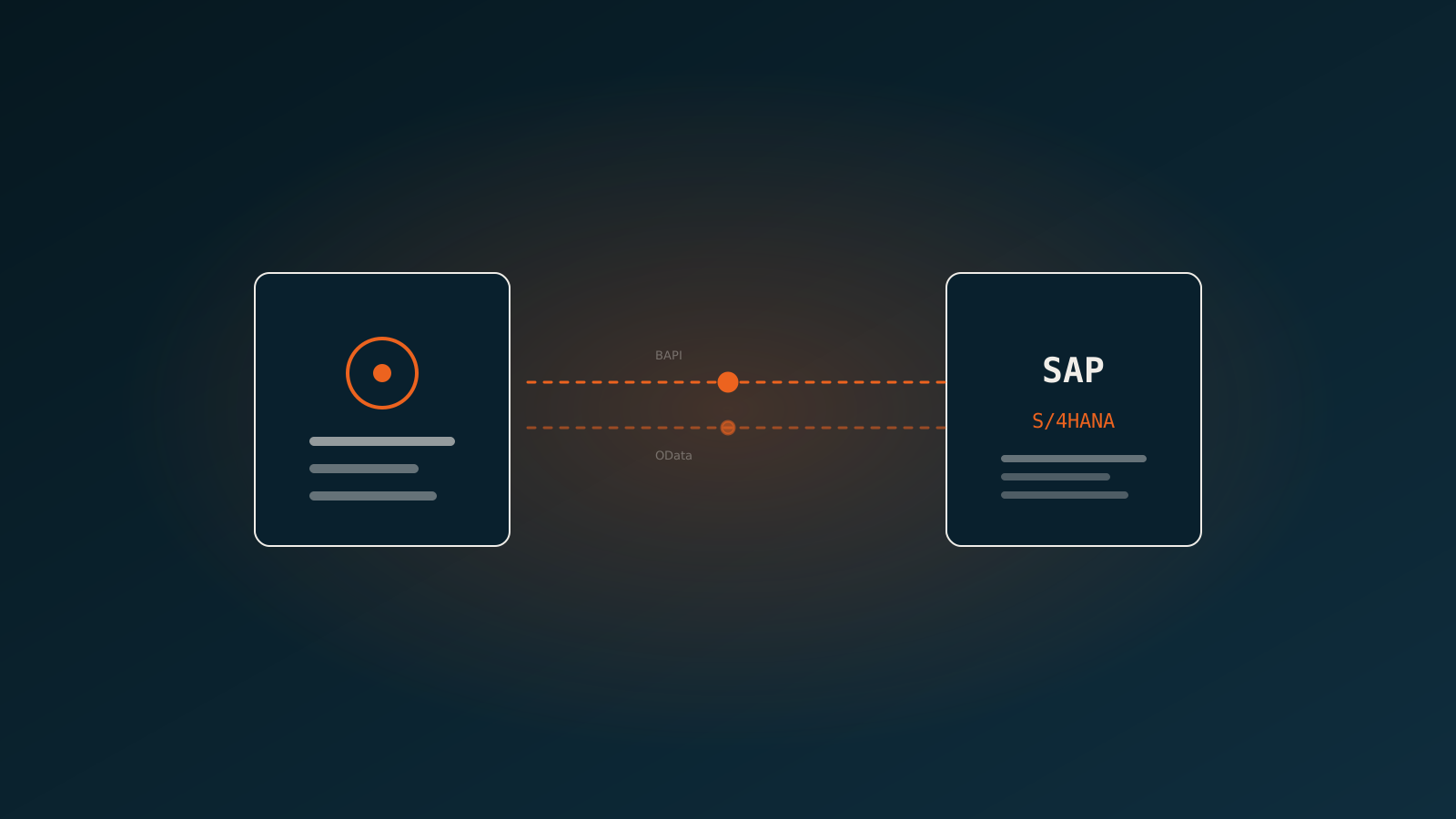
SAP sits at the heart of many Dutch enterprises. An AI coworker posts directly into S/4HANA through BAPIs, OData and RFC, with no middleware and the same audit trail as a person.
Why SAP needs its own approach
SAP S/4HANA isn't just another mid-market ERP. It runs at the core of finance, procurement and supply chain for thousands of Dutch companies, with a tight regime of roles, authorizations, transport requests and change management. Where AFAS, Exact or Odoo expose themselves through lightweight APIs, SAP demands respect for Basis governance, release strategy and the existing architecture.
Many AI and automation tools work around SAP: pull data out, process it in a separate platform, push it back through an interface user and a batch upload. It works, but it makes the integration brittle, fragments the audit trail and turns every SAP release into a potential breakpoint. For a system you barely want to touch per quarter, that isn't a sustainable direction.
Native integration: BAPI, OData and RFC
Our AI coworkers talk directly to SAP through the standard interfaces SAP itself has supported for years: BAPIs for business objects, OData services for Fiori-style flows, and classic RFC where needed. No ABAP forks, no shadow tables, no staging layer. The AI coworker gets its own SAP user with explicit authorization objects and works inside the rights your Basis team assigns it.
In practice that means:
- Postings land directly in SAP via BAPI_ACC_DOCUMENT_POST or MIRO, with correct company, ledger, cost and VAT codes.
- Master data, customers, vendors, items, is pulled live from SAP, not from a copied snapshot.
- Changes to your SAP setup, new fields, validations or customer enhancements, keep working without changes to the integration.
- Audit logs live in SAP change documents at the user level. Every action by the AI coworker is traceable for your compliance team.
Processes we often build in SAP
Invoice processing with three-way matching against purchase orders and goods receipts, posted automatically through MIRO with the right tolerance groups. Sales orders coming in via email, portal or EDI, created through VA01 with validation against customer pricing agreements and availability. Master data governance: vendor and customer requests checked first against duplication, VAT and chamber-of-commerce records before they land in SAP. And service or project postings where emails and PDFs are converted into IW31 notifications or project entries.
Transport requests and release management
An AI coworker doesn't introduce new code into your SAP system. That's deliberate: your transport landscape (DEV, QAS, PRD) stays owned by your Basis team, and our logic runs outside SAP on our platform. What changes is configuration, users and authorizations, and those follow your own change management. It also means a new SAP release (for example S/4HANA 2023 to 2024) isn't a breakpoint: the BAPI and OData contracts are stable, and any shifts we absorb on the integration platform.
What this means for your SAP team
Your Basis, security and functional consultants stay in control. They decide which authorization objects the AI coworker receives, in which client and for which company code. What changes is that the repetitive work, the posting, the matching, the extraction, leaves the queue of your finance team. The knowledge stays, the process ownership stays, and SAP logic stays the source of truth. Only the manual step in the middle disappears. Plan a Quick Scan if you'd like to know which process in your SAP landscape is the best fit.
Keep reading
More insights
Curious what an AI coworker can do for your process?
Book a no-strings Quick Scan and explore the options.
Book a Quick Scan