Master data management: keeping customer and item data clean with an AI coworker
Duplicates, stale prices, missing VAT codes: master data rots by itself. An AI coworker keeps customer and item data clean against your own rules, without an MDM tool on the side.
MDM is a chronic chore, not a project
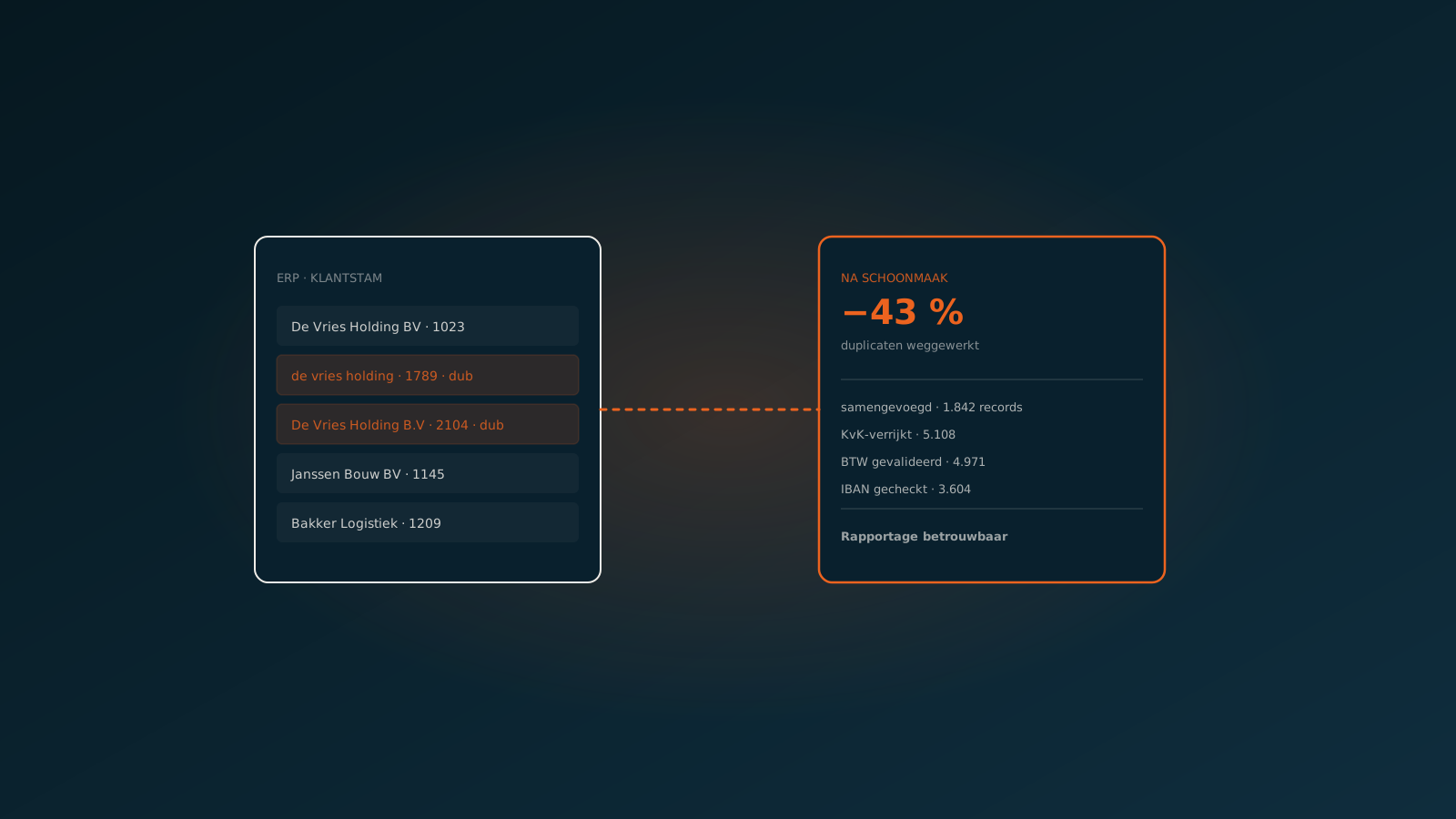
In almost every organisation, somewhere there's a master table everyone knows is contaminated and nobody cleans up structurally. The same customer with three spellings, a supplier whose VAT number has been wrong for two years, an item running under two codes since an ERP migration. It rarely becomes a project, because it's never quite urgent enough.
At the same time almost everything leans on these tables: billing, reporting, credit limits, stock, purchasing. A mistake in master data ripples through dozens of processes. An AI coworker on MDM isn't a replacement for a Master Data Manager, but the executor who does the work that otherwise stays on the pile.
Duplicate detection that does more than text-match
A naive duplicate check looks at text similarity: "De Vries BV" against "de vries B.V.". An AI coworker looks at context: Chamber of Commerce number (if in master data), registered address, IBAN, prior invoices to the same legal entity. That surfaces not only spelling variants but also duplicates that looked unique on other fields but are in fact the same customer.
Enrichment with Chamber of Commerce, VAT and IBAN
A customer or supplier record without verified registration and VAT ID is a risk for your VAT return. The AI coworker fetches Chamber of Commerce data via the official API (branches, sector, active status), validates VAT numbers against VIES for EU suppliers and checks IBAN for format and bank code. Findings land as proposals in an approval screen, not as direct changes, so your MDM owner stays in control.
What the AI watches continuously on master data:
- Customers and suppliers without or with expired registration status.
- VAT numbers no longer valid in VIES.
- IBANs with format errors or pointing to a country outside your policy scope.
- Items that don't appear in any transaction in the last 18 months.
- Price lists with end dates in the past or without end dates where required.
Item master: from name to classification
On the item side the gain is in clean classification. Product groups, VAT codes, customs codes, EAN, supplier item number: in many ERP implementations these fields are incomplete or inconsistent. The AI coworker derives values from the description, product documentation and prior transactions, and proposes additions. Approval stays with the product manager or supply chain owner, who makes the final call.
Result of MDM automation: reporting that adds up again
The direct win sits in simple numbers: duplicate rate in the customer master down (typically from 6 to 12 percent to under 1), the share of records with complete enrichment up beyond 95, and VAT filings no longer slowed by corrections. The indirect win sits in reporting your leadership can steer on again, because the numbers stop drifting. Plan a Quick Scan if you'd like to know how dirty your master data really is.
Keep reading
More insights

Curious what an AI coworker can do for your process?
Book a no-strings Quick Scan and explore the options.
Book a Quick Scan