Accounts payable with an AI coworker: from invoice to payment batch
Accounts payable is more than posting invoices. It's matching, approval, planning payment batches and managing supplier relationships. An AI coworker runs that whole chain, with human review where it matters.
Accounts payable is a process, not a task list
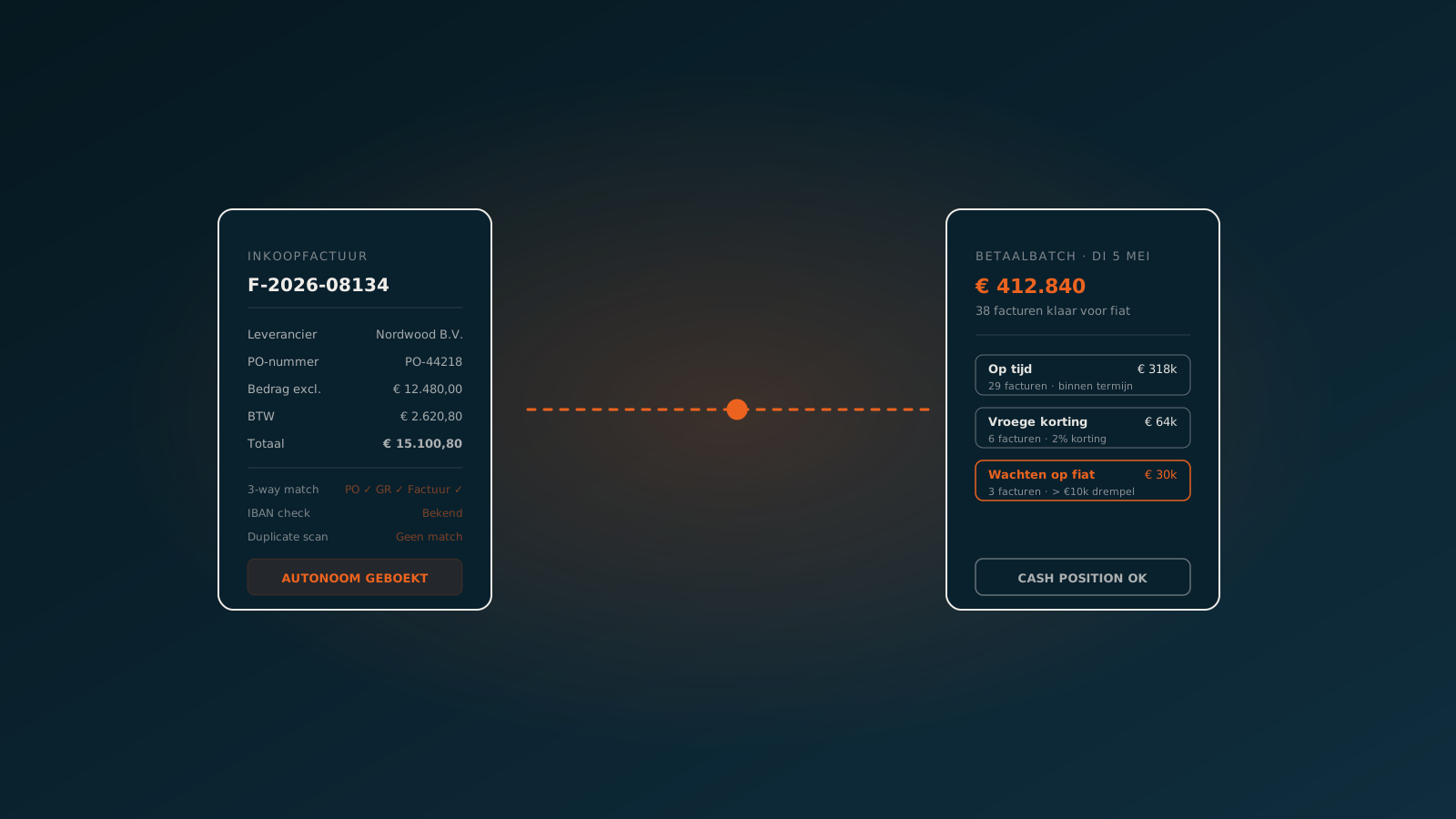
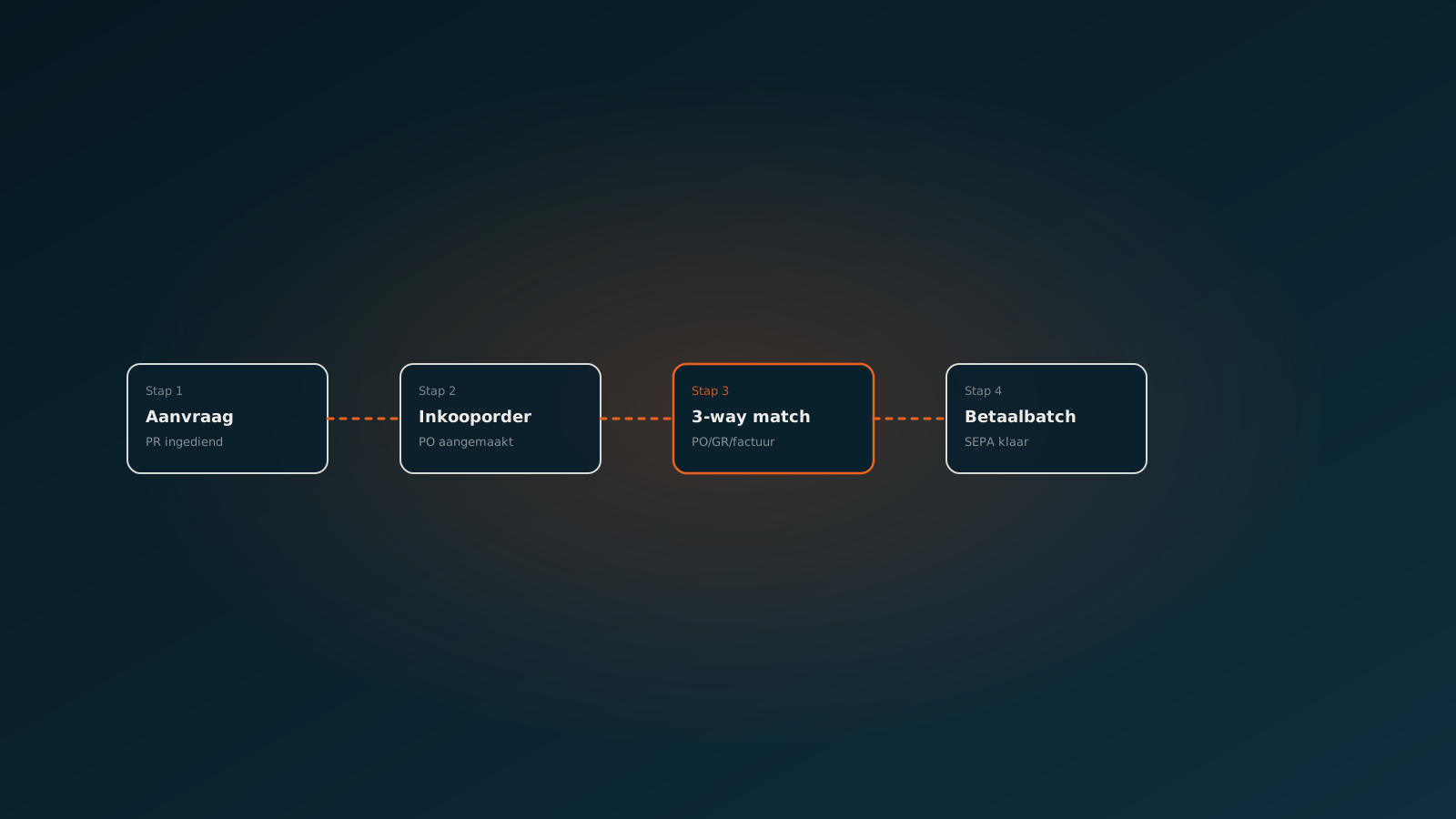
Many automation stories around AP stop at posting the invoice. Invoice from email, OCR over it, line into the ERP. In reality the work starts after that: matching against the purchase order and goods receipt, approval by the right person, splits across cost centers, duplicate-payment checks, scheduling the payment batch and reconciliation against the bank statement. It's a chain, not a single step.
What an AI coworker does in AP
The AI coworker treats the whole chain as one process. It reads incoming invoices from email or EDI, extracts supplier, invoice number, date, lines and VAT. It validates against your supplier master, open purchase orders and goods receipts in SAP, AFAS, Exact, Dynamics 365 or Odoo. It routes approval requests to the right budget holder through the channels you already use. It prepares payment batches according to your payment policy. And it closes the loop with reconciliation against the bank statement.
What it doesn't do is take approval authority away from people. Approving an invoice above a threshold stays a human action. The AI coworker makes sure that action arrives well: at the right person, with the right context, with a proposal.
Three-way matching and exceptions
Three-way matching between invoice, purchase order and goods receipt is the core. When everything lines up, the AI coworker posts autonomously within the tolerance groups you set. What deviates, a price variance, a quantity mismatch, a missing receipt, goes to the right handler with a proposal. The AI coworker shows what differs and what the most likely fix is, and the human decides.
- Invoice intake from shared inboxes, EDI and supplier portals.
- Master data validation: do we know this supplier, do IBAN and VAT number check out?
- Three-way matching against open POs and GRs.
- Approval routing based on amount, cost center and authorization matrix.
- Payment batches prepared based on payment terms, early-payment discount and cash position.
- Reconciliation against the bank statement and automatic clearing of open items.
Fraud prevention as a side effect
An interesting side effect: because the AI coworker treats every invoice the same way, anomalies stand out faster. A new IBAN on an existing supplier. A duplicate invoice under a different invoice number. A supplier that isn't in master data yet. A small amount split across a hundred postings. What a person under time pressure misses, an AI coworker spots in seconds, and routes it to the right person before the payment leaves the door.
Accounts payable automation: results in numbers
For a typical mid-market implementation we see invoice posting time drop from four to six minutes to under thirty seconds, matching rates above 90 percent with good scoping, and a sharp drop in late payments because the whole chain gets shorter. More important than the numbers is what sits underneath: an AP process that runs consistently, with an audit trail per case, so your auditor isn't left puzzling at year-end close.
Where to start with accounts payable automation
An AP project starts with an audit of your largest invoice stream: supplier volume, average amount, level of PO matching and the existing authorization matrix. From that audit we determine which part of the process can run autonomously first. Plan your go-live with a Quick Scan to see what savings are realistic in your AP process.
Curious what an AI coworker can do for your process?
Book a no-strings Quick Scan and explore the options.
Book a Quick Scan