AI coworker in manufacturing: from order to work order in four minutes
The step from customer order to work order needs coordination with purchasing, planning and engineering. An AI coworker handles that step, with a planner who stays in control of capacity.
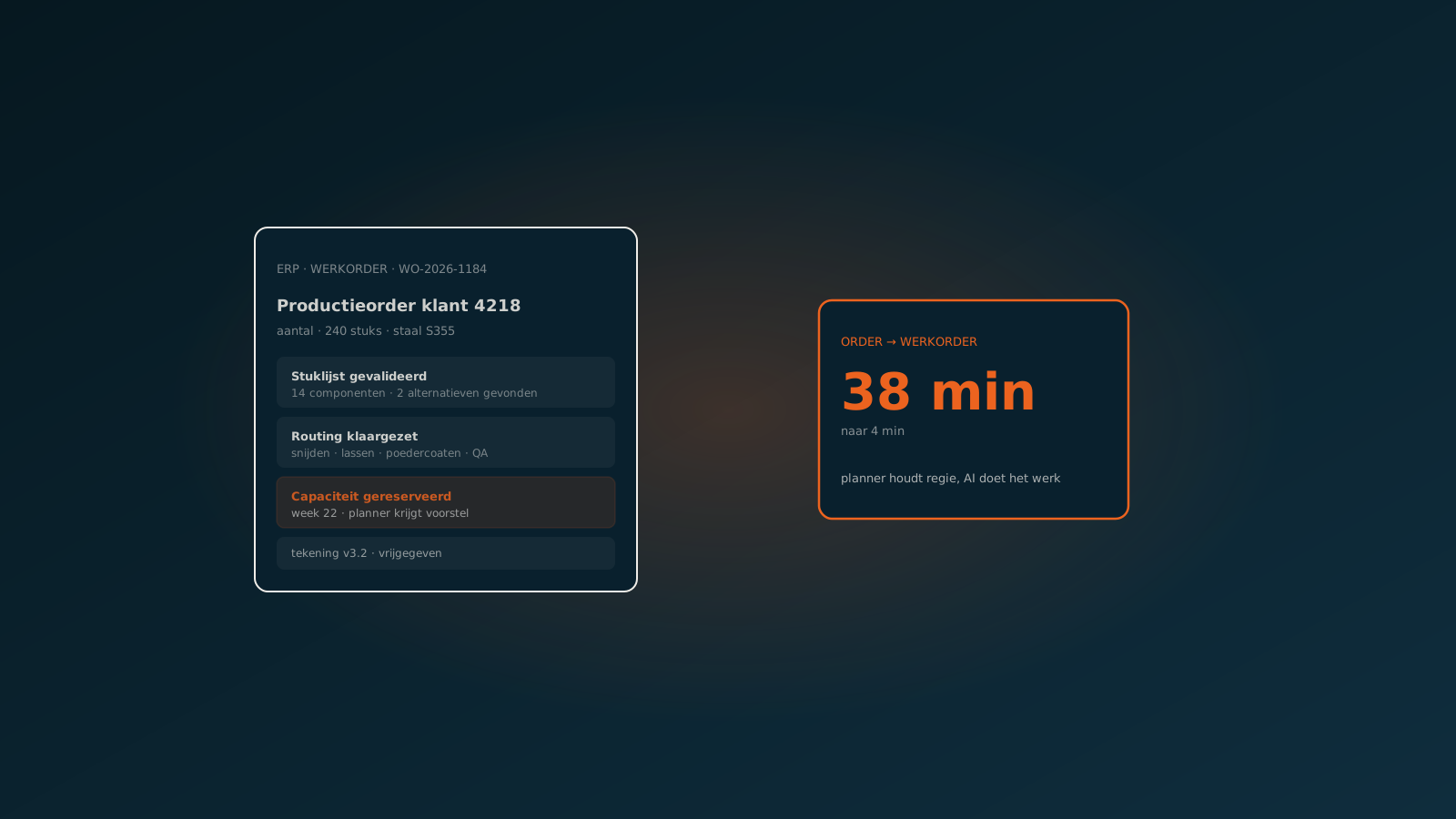
Between order and work order sits an hour of coordination
A customer order in manufacturing is rarely a work order straight away. Between "customer placed it" and "production can start" sits a chain of checks: does this configuration already exist, is the bill of materials correct, are the components in stock or ordered, is there capacity in week 22 or does it slip to week 24, does the drawing match engineering's latest version. For one order, manageable, for twenty a day, a bottleneck.
An AI coworker in manufacturing picks up that preparation chain. It doesn't take over the capacity call, that stays with the planner. But it makes every call cheaper by having the full context already laid out.
Validating and completing the bill of materials
On configurable products every order brings its own BOM variant. The AI coworker checks each line for technical fit (no incompatible components), looks for available alternates on scarce parts, and prepares the final BOM for engineering or the work prep desk. For repeat configurations the previously released version is reused automatically, with a validity check.
Routing and a capacity proposal
The routing (cutting, bending, welding, powder coating, assembly, QA) follows from BOM and product type. The AI coworker queues the steps in the ERP (SAP PP, Dynamics 365 F&O, Exact Globe or Infor) and produces a first capacity proposal: which week best fits this volume given current load. The planner sees the proposal with reasoning and can adjust in seconds.
Engineering: drawings and revision control
The right drawing revision belongs to the work order. The AI coworker links the current revision from PDM (Teamcenter, Windchill, SolidWorks PDM), checks the revision is released, and attaches the drawing to the work order. If something changes during the life of a work order, planning and production get a flag, not silence.
What an AI coworker in manufacturing typically picks up:
- Turning customer orders into work orders with BOM, routing and capacity proposal.
- Purchase requisitions for missing components, with lead-time checks against suppliers.
- Drawing and revision control linked to the work order.
- Service and warranty claims from the field, linked to the production serial number.
- Recurring maintenance orders and calibration cycles for your production assets.
- Variance analysis on work-order actuals versus standards.
What AI in manufacturing gives production and planning
Lead time from order to work order typically drops from 30 to 60 minutes per order to under five. For mid-market manufacturers with 50 to 200 orders per week that's quickly an FTE that can do other work. More important: the planner keeps control of capacity and orders don't stall on administrative prep. Plan a Quick Scan if you'd like to know which step in your order-to-work-order chain costs the most manual time.
Keep reading
More insights
Curious what an AI coworker can do for your process?
Book a no-strings Quick Scan and explore the options.
Book a Quick Scan