Staff shortages in construction: how to relieve the back office
71 percent of Dutch construction vacancies are hard to fill and more than a quarter of the workforce is over 55. The back office feels it first. Four options side by side, and why the knowledge of two people is your biggest risk.
Short answer
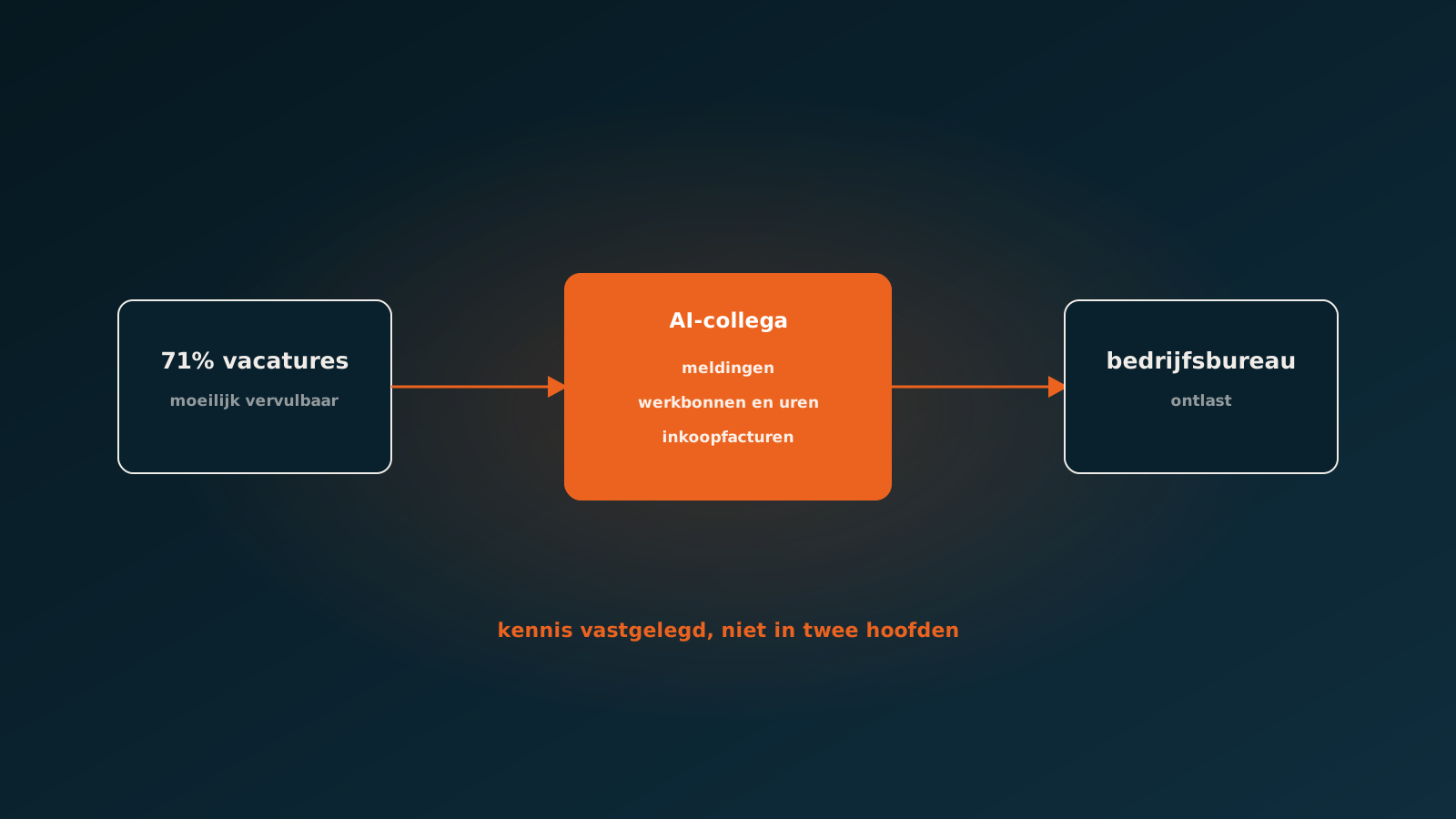
The staff shortage in construction also hits the back office: according to the Dutch UWV Employer Survey 2025, 71 percent of construction vacancies are hard to fill, the highest share of any sector, and according to the research institute EIB the sector loses some 9,500 workers a year to natural attrition. You relieve the back office by handing routine document work, such as reports, job sheets, hours and purchase invoices, to an AI coworker. The same people can then handle more work, and the knowledge that now sits in a few heads gets captured.
The figures
| Figure | What it says | Source |
|---|---|---|
| 71% | of construction vacancies are hard to fill, the highest share of any sector | UWV Employer Survey 2025 |
| 9,500 | workers a year lost to construction through natural attrition | EIB, Construction labour market trends 2025-2029 |
| Over 25% | of the construction workforce is over 55 | EIB |
Those figures are usually about tradespeople on site. But the same scarcity applies to work planners, schedulers and administrative staff. In many companies a back-office vacancy has been open for months.
The real risk: two people who know how it works
In many construction, installation and maintenance companies the back office runs on a few people who know exactly which contract belongs to which housing association, which urgency standard applies where and how to post a tricky job sheet. That works, until one of them retires, falls ill or leaves.
Then the knowledge leaves too. A company that depends on a few indispensable people is more vulnerable, harder to hand over and, in a sale, worth less.
Four options side by side
| Extra staff | Scan-and-recognise tool | Custom build by software partner | AI coworker | |
|---|---|---|---|---|
| Work lands in your ERP | Yes, by hand | Yes, with perfect input | Yes | Yes, automatically |
| How fast | Vacancy often open for a long time | Fast, but half the job | Often 6 to 12 months | Live in 8 weeks on average |
| Cost | Wage costs rise every year | Price per document, grows with volume | Hourly, changes included | Fixed monthly fee per process |
| Keeps running during illness and departures | No | Partly | Partly | Yes |
| Knowledge captured | In people's heads | No | Only what you have built | Yes, learns from every correction |
Extra staff remain necessary for work that takes judgement. But retyping reports, job sheets and invoices is not that work.
What an AI coworker takes off the back office
- Turning fault reports and repair requests into work orders.
- Processing job sheets and service tickets against project and work order.
- Posting weekly timesheets and hours to employee and project.
- Checking supplier order confirmations.
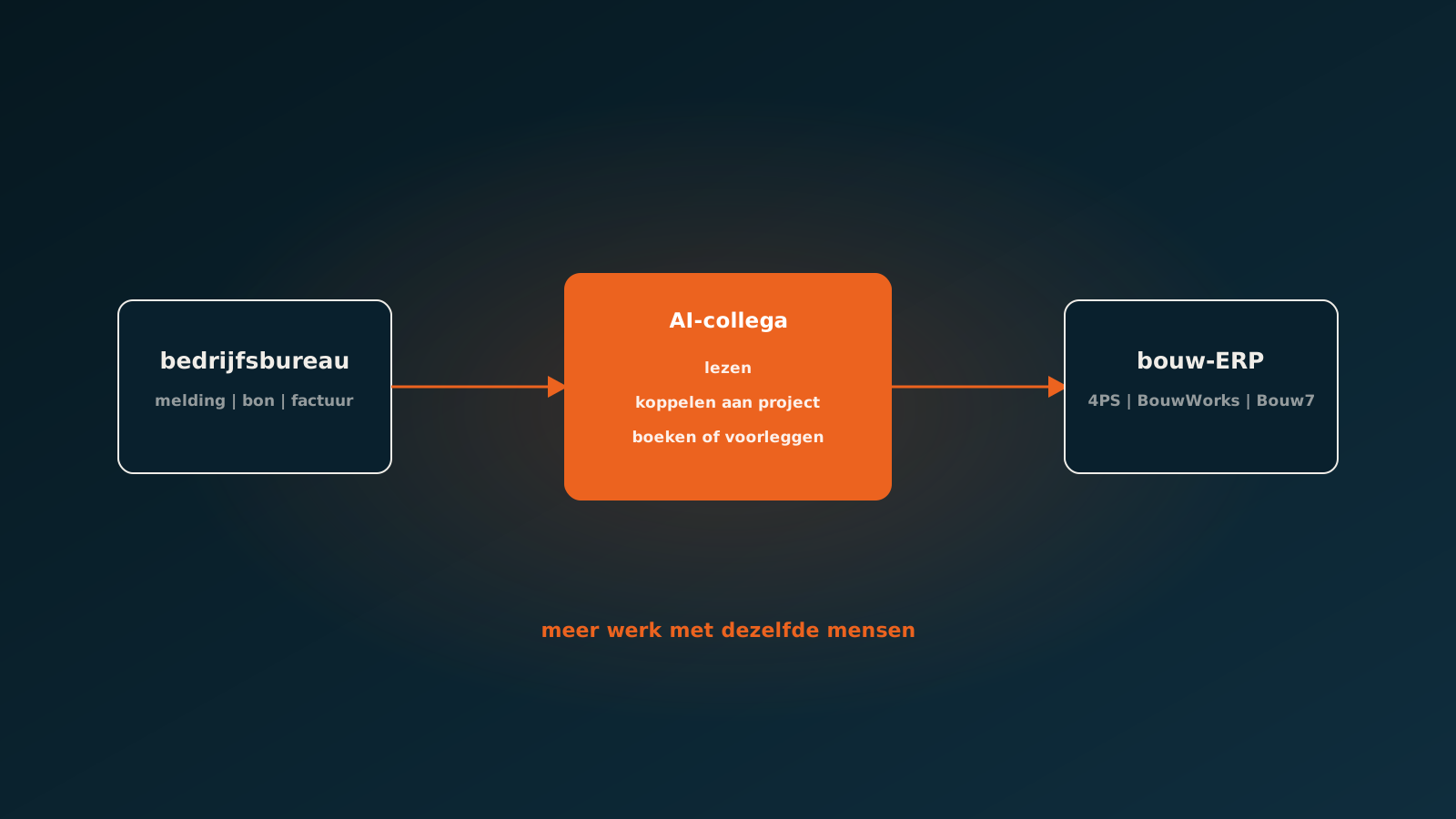
- Matching purchase invoices to project and cost centre.
- Creating invoices to clients according to contract.
Your people stay in control: doubtful cases come to them, with the reason and a proposal attached. Every correction is recorded, so the knowledge of your best people stays in the process, even when they are no longer there.
See the Dammers Bouw case: service tickets from 10 minutes to 10 secondsRead next: AI in construction, what works in 2026?Frequently asked questions
How big is the staff shortage in Dutch construction?
According to the UWV Employer Survey 2025, 71 percent of construction vacancies are hard to fill, the highest share of any sector. EIB estimates the sector loses some 9,500 workers a year to natural attrition, and more than a quarter of the workforce is over 55.
How do you relieve the back office in construction?
By handing over routine document work: reports, job sheets, hours, order confirmations and purchase invoices. An AI coworker processes them straight into the ERP, so the same people can handle more work.
Does an AI coworker replace back-office staff?
No. It takes over the retyping. Decisions and doubtful cases stay with your team, which gains time for clients, planning and exceptions.
How do you keep knowledge when a key person leaves?
By capturing the rules and exceptions in the process. An AI coworker learns from every correction per client and project, so that knowledge stays when the employee leaves.
Getting started
Send us ten anonymised reports or job sheets and within a week you see what an AI coworker does with them. An AI coworker is live within eight weeks on average, faster than most back-office vacancies get filled. Plan your go-live whenever it suits you.
Keep reading
More insights
AI in construction: what works in 2026 and where to start
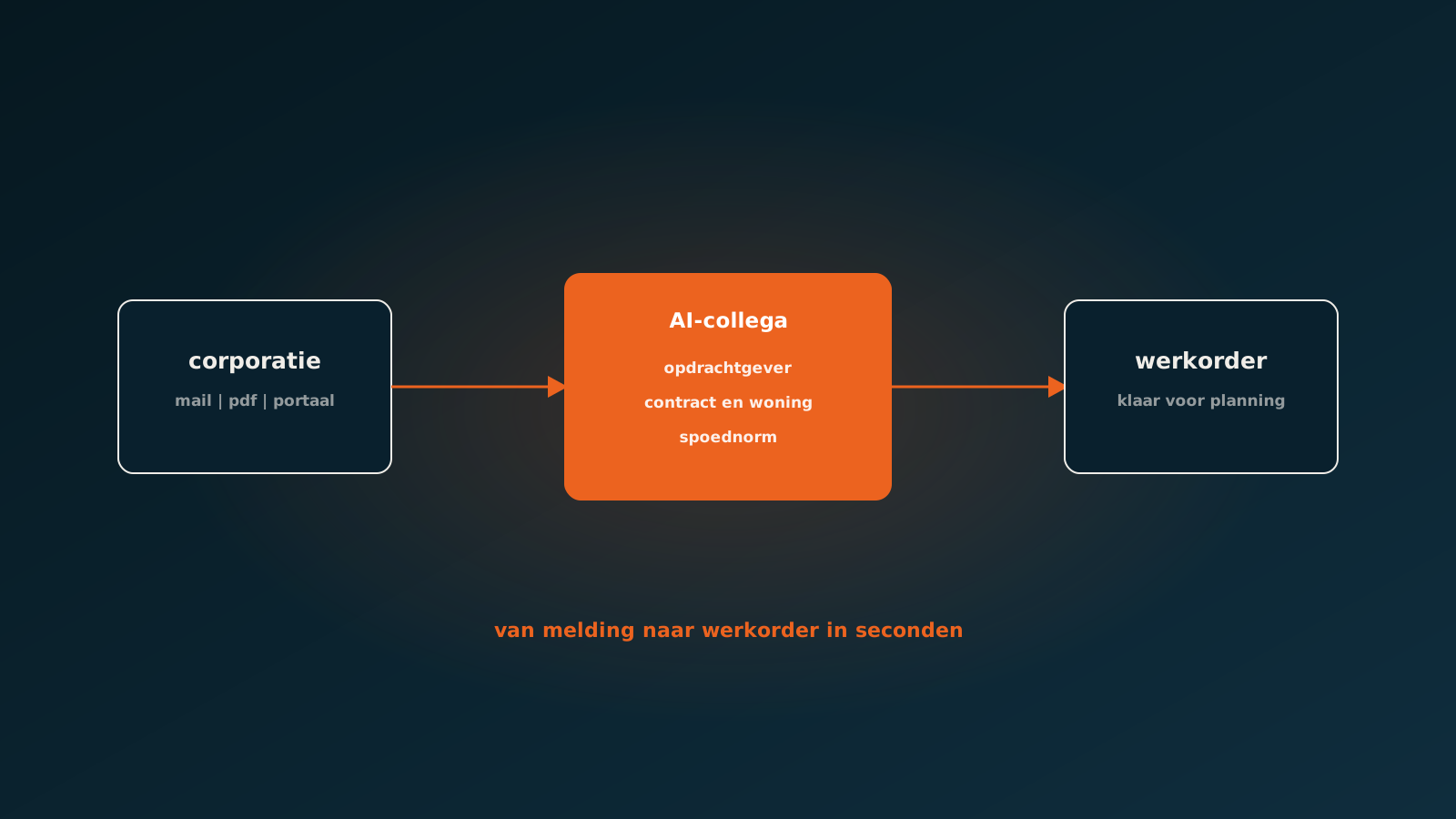
Processing fault reports and repair requests from housing associations automatically
Automating service tickets in construction and installation: 10 minutes to 10 seconds
Curious what an AI coworker can do for your process?
Book a no-strings Quick Scan and explore the options.
Book a Quick Scan