Processing fault reports and repair requests from housing associations automatically
Every housing association sends repair requests in its own format, by email, PDF or portal. Here is how an AI coworker turns each report into a work order on the right client, contract and property, with the urgency standard attached.
Short answer
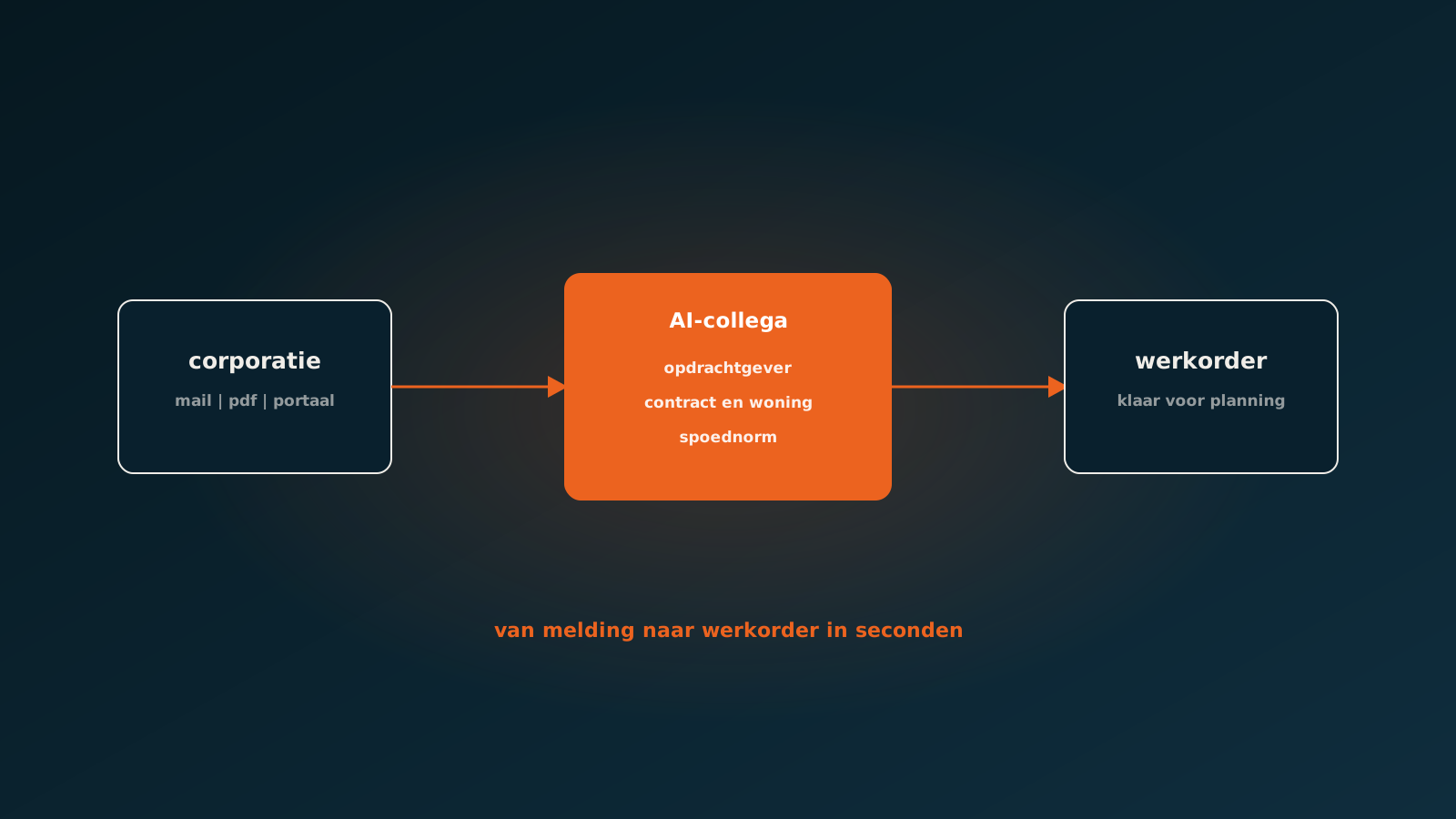
Processing fault reports and repair requests automatically means an AI coworker reads every incoming report, whether it arrives by email, as a PDF or through a housing association's portal, and turns it into a work order in your ERP. It links the client, the maintenance contract and the property, applies the contract's urgency standard and flags urgent jobs. When in doubt, such as an unclear address, it escalates the report to a colleague. At Dammers Bouw that takes 10 seconds per report instead of an average of 10 minutes.
Why repair requests mean so much manual work
A tenant reports a leak or a broken boiler to the housing association. The association passes the job on to the maintenance company: by email with a PDF, through its own portal or as a message from a planning system. Every association does it differently, with its own job numbers, field names and agreements on response times.
In the back office someone retypes every report: look up the client, pick the right contract, link the address to the property, copy the description, set the urgency. During a peak, such as the first cold week of the year, the pile grows faster than it shrinks. And the knowledge of which contract and urgency standard applies where usually sits with a few people.
What an AI coworker does with a report
- Collecting: from the shared mailbox, as an attachment or from the association's portal.
- Reading: job number, address, description, tenant contact details and requested response time, in any format.
- Linking: the right client, maintenance contract and property or complex in your ERP.
- Setting urgency: applying the contract's urgency standard and flagging urgent jobs straight away.
- Creating: the work order in your ERP, ready for planning.
- Escalating: when in doubt, such as an address that is not unique, the report goes to a colleague with the candidates attached.
Manual versus with an AI coworker
| Manual | With an AI coworker | |
|---|---|---|
| Time per report | 10 minutes on average | Seconds, 10 seconds at Dammers Bouw |
| During a peak | Pile grows, response times slip | Same lead time, even when busy |
| Urgency standard | Depends on who reads the report | Always from the contract, urgent jobs flagged |
| Contract knowledge | In the heads of a few people | Captured and improved with every correction |
| After hours | Waits until the next morning | Processed straight away, ready for planning |
After the work order: planning, job sheet and invoice
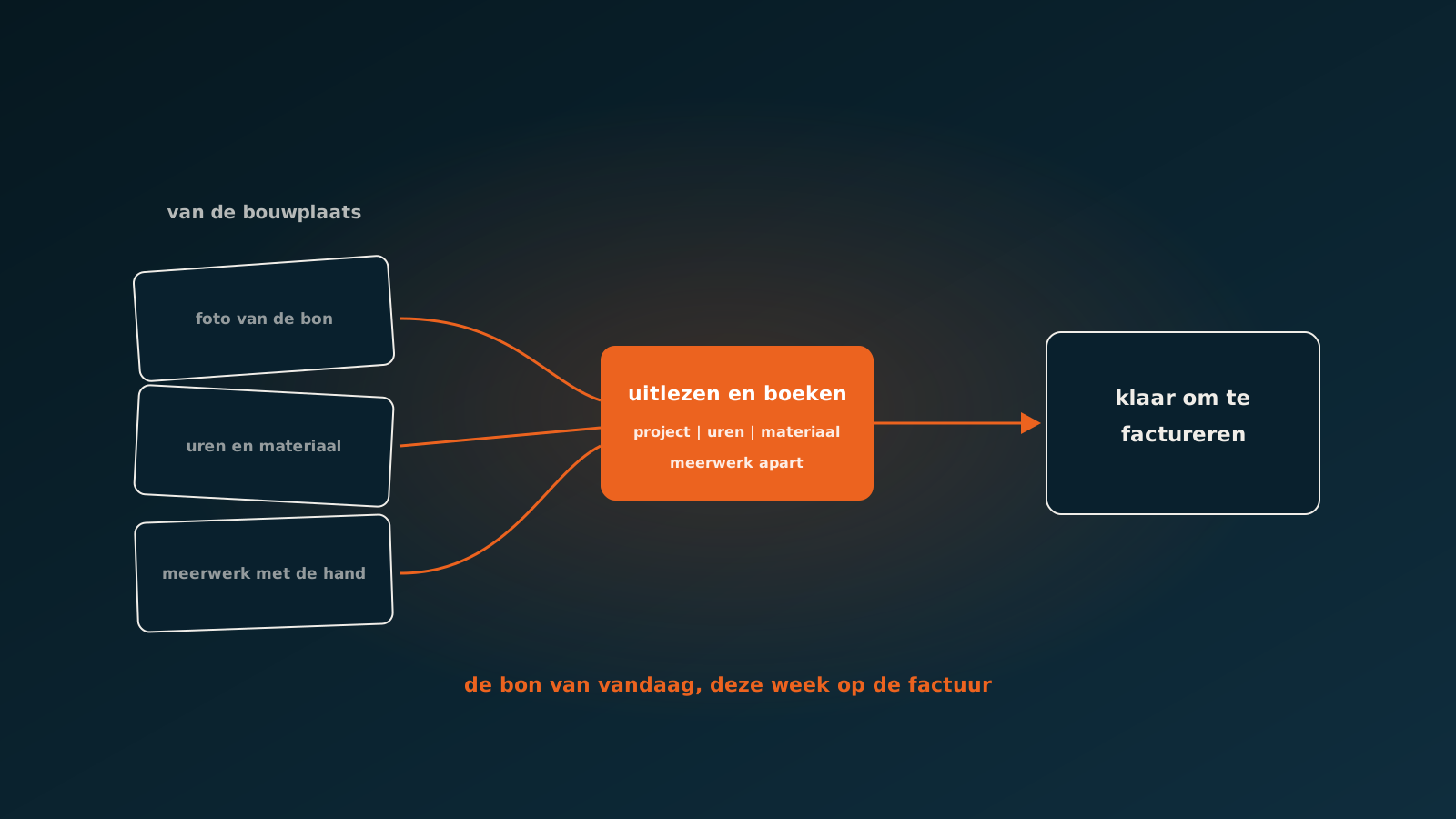
The report is only the start of the chain. Once the work order exists, planning and tenant contact follow. After the job the job sheet comes back with hours and materials, and then the invoice goes to the association. An AI coworker can take over every link in that chain: processing the job sheet against the work order and creating the invoice with the contract's rates and surcharges.
That closes the most expensive leak in maintenance: work that was done but never invoiced, because the job sheet got stuck somewhere.
Read next: digitising job sheets in constructionIn which system?
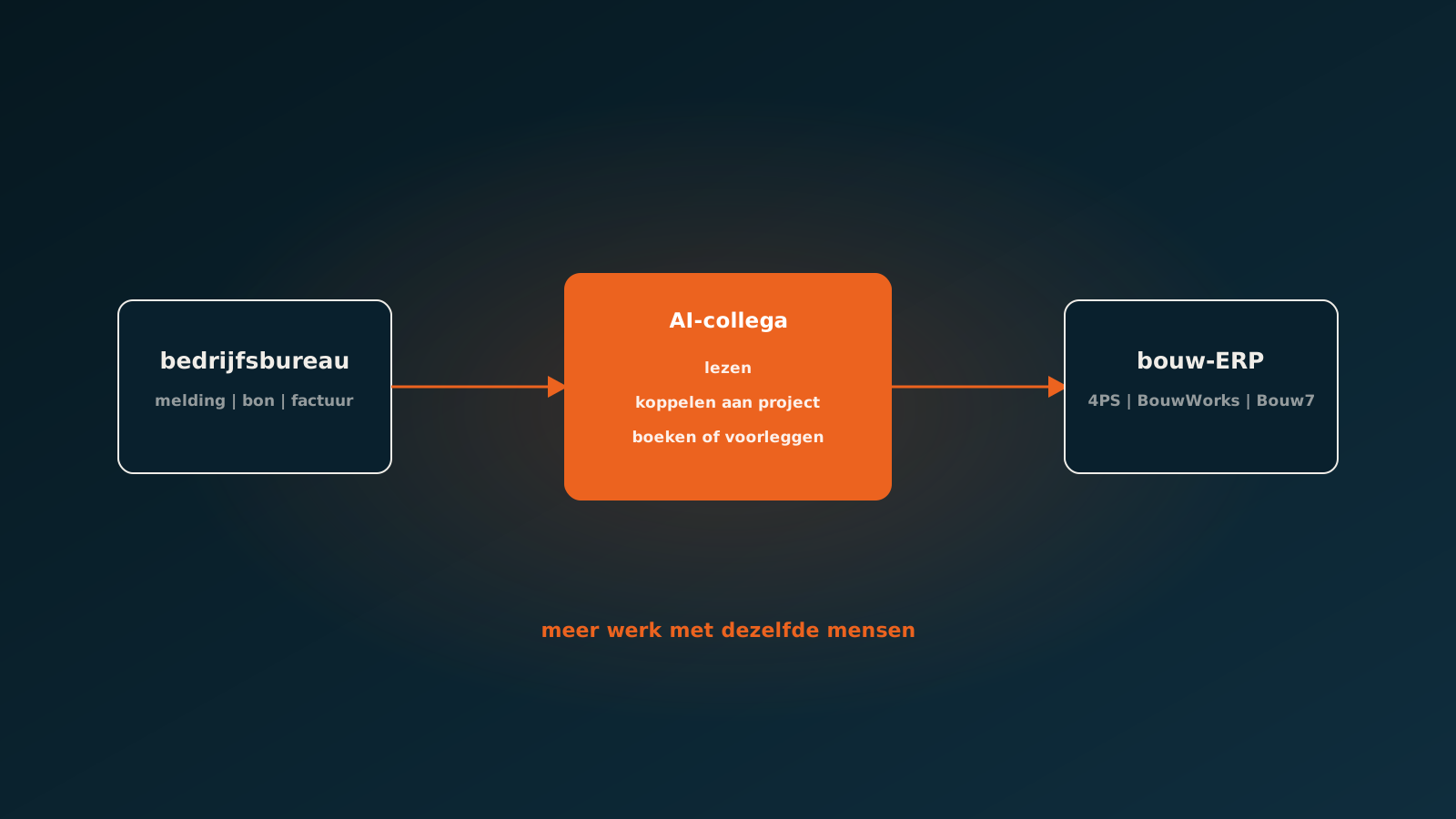
The AI coworker works in the ERP you already have, including 4PS, BouwWorks, Bouw7, Metacom and Acto, as well as AFAS, Exact, Odoo, SAP and other systems with an API. Your team keeps working in the screens it knows.
More on fault reports at AgentsLab BouwFrequently asked questions
Can fault reports from housing associations be processed automatically?
Yes. An AI coworker reads reports in any format, by email, PDF or portal, links client, contract and property, and creates the work order in your ERP. When in doubt it escalates the report to a colleague.
Does it work with housing association portals?
Yes, as long as the reports can be retrieved from the portal as an email, a file or through an integration. Every association keeps its own format; the AI coworker adapts, not the association.
How does the AI coworker handle urgent reports?
It applies the urgency standard from the client's maintenance contract and flags urgent reports straight away, so planning sees them immediately.
How much time does it save?
At Dammers Bouw processing went from an average of 10 minutes to 10 seconds per ticket. How much it saves for you depends on your volume and the number of formats.
Which software does it work in?
Among others 4PS, BouwWorks, Bouw7, Metacom and Acto, as well as AFAS, Exact, Odoo, SAP and other systems with an API.
Getting started
Send us ten anonymised reports from different housing associations. Within a week you see what an AI coworker does with them. An AI coworker is live within eight weeks on average. Plan your go-live whenever it suits you.
Curious what an AI coworker can do for your process?
Book a no-strings Quick Scan and explore the options.
Book a Quick Scan