Reducing failure costs in construction: start with information, not the building site
Dutch construction companies estimate their own failure costs at 5 to 8 percent of the contract sum. Many errors start not on site but with incomplete or late information. Here is how to tackle the administrative side.
Short answer
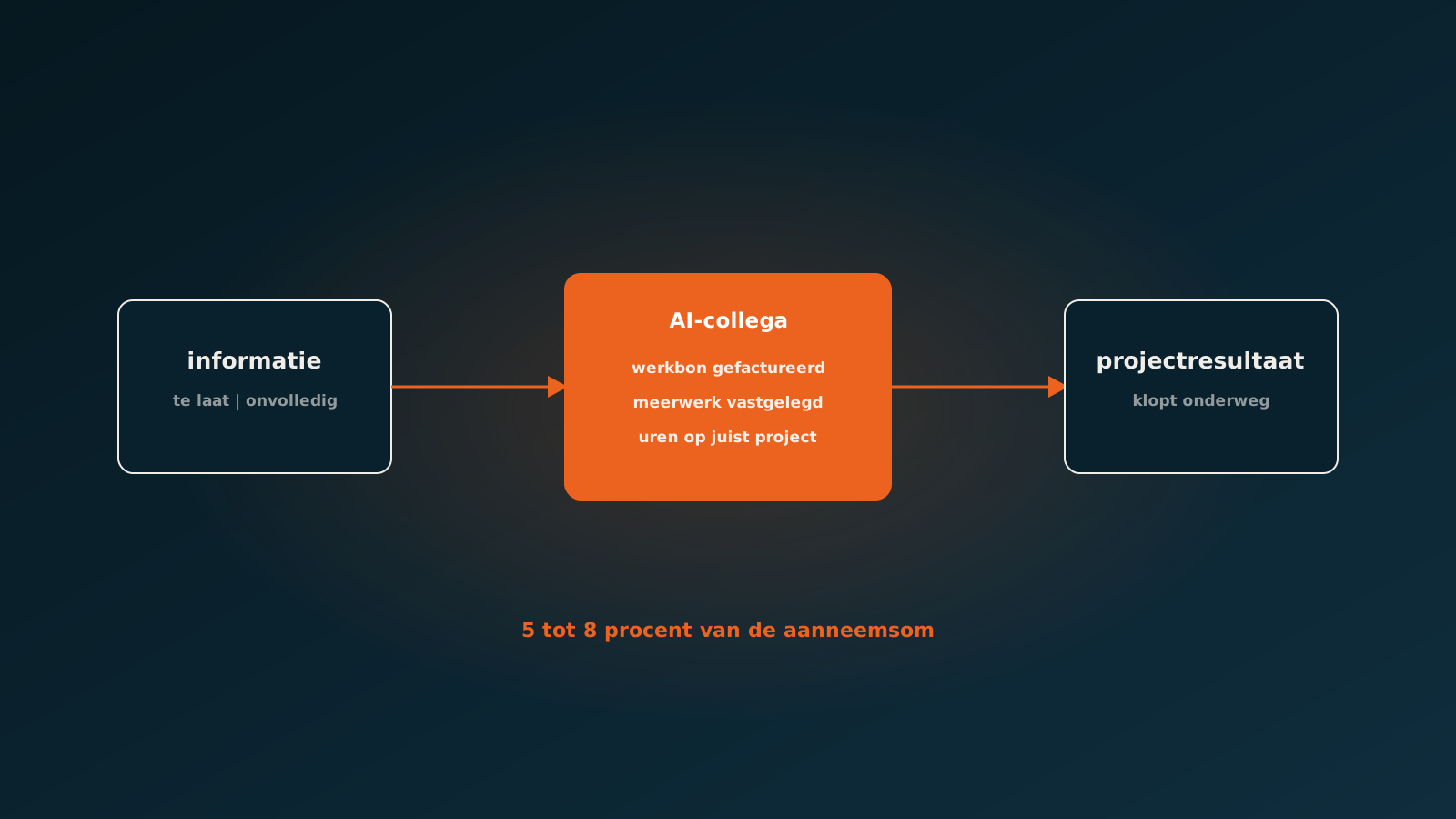
Failure costs in construction are the costs of mistakes, rework and waste. Dutch construction companies estimate them at 5 to 8 percent of the contract sum (ABN AMRO, Verspilde moeite, 2019), and a large share starts with incomplete or late information. The fastest way to reduce them is to get the information flow in order: reports, job sheets, hours, extra work and purchase invoices must be in the ERP completely, on time and on the right project. An AI coworker processes those documents immediately and flags deviations while the work is still running.
What failure costs are
Failure costs are everything you spend because something does not go right the first time: rework, return visits, waiting time, wrongly delivered material, disputes afterwards. In construction they are notoriously high. In ABN AMRO's study Verspilde moeite (2019), Dutch construction companies estimated them at 5 to 8 percent of the contract sum, often more. With margins of a few percent, that is the difference between profit and loss.
The failure costs that do not start on site
Failure costs make everyone think of a wrongly poured floor. But a good share arises in the office, and you only see it when it is too late.
| Administrative error | What it costs |
|---|---|
| Job sheet that is never invoiced | Work done without revenue |
| Extra work without written approval | Dispute with the client, often written off |
| Hours on the wrong project | Unreliable post-calculation, wrong prices in the next quote |
| Purchase invoice on the wrong cost centre | Project result that only adds up at final settlement, or not at all |
| Report reaching planning too late | Urgency standard missed, penalty clause or unhappy client |
| Order confirmation not checked | Wrong or late material on site |
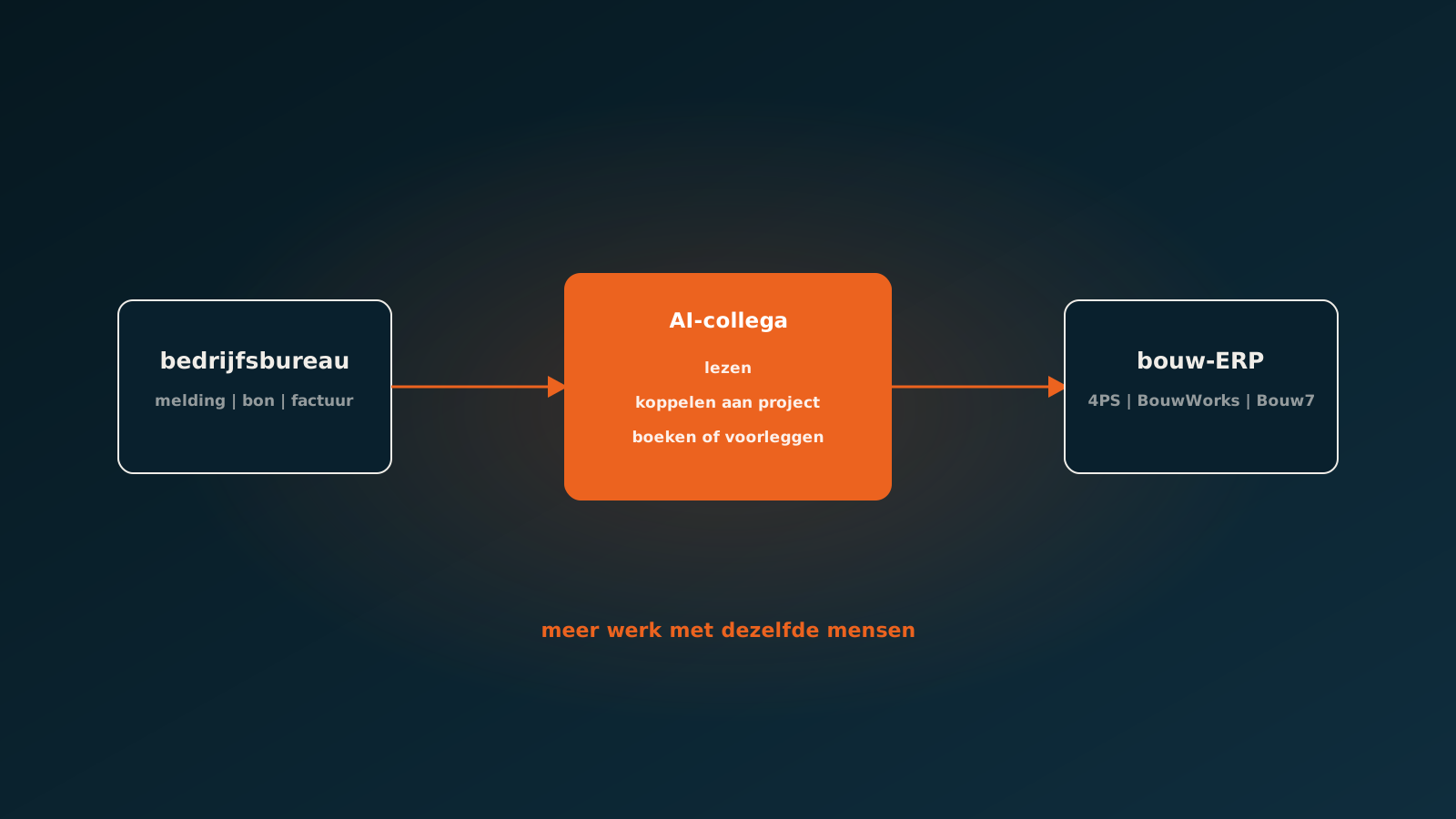
The pattern is always the same: information arrives in an email, a PDF or on paper, someone has to retype it, and somewhere between arrival and ERP it goes wrong or gets stuck.
Extra work: the biggest silent leak
Extra work deserves its own paragraph. It is agreed verbally on site, scribbled on a job sheet or confirmed in a text message. If it is not recorded straight away with the client's approval, chances are you will not get paid for it, or only in part.
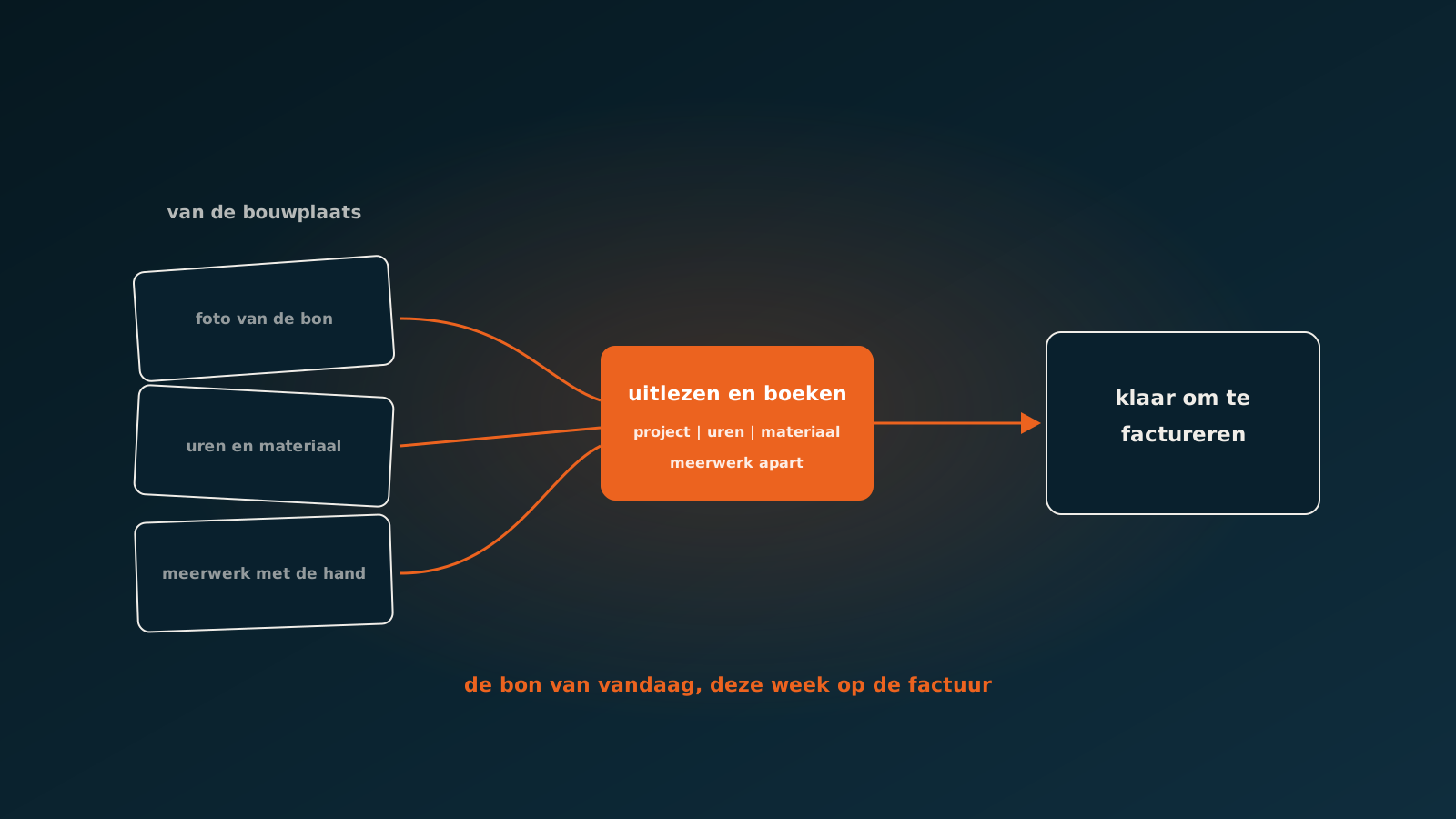
An AI coworker recognises extra work on job sheets and in emails, records it on the project and flags when the client's approval is still missing. That way the extra work is in your books before the discussion starts.
How an AI coworker reduces failure costs
- Complete: every report, job sheet and invoice gets processed, nothing stays stuck in a mailbox or a pocket.
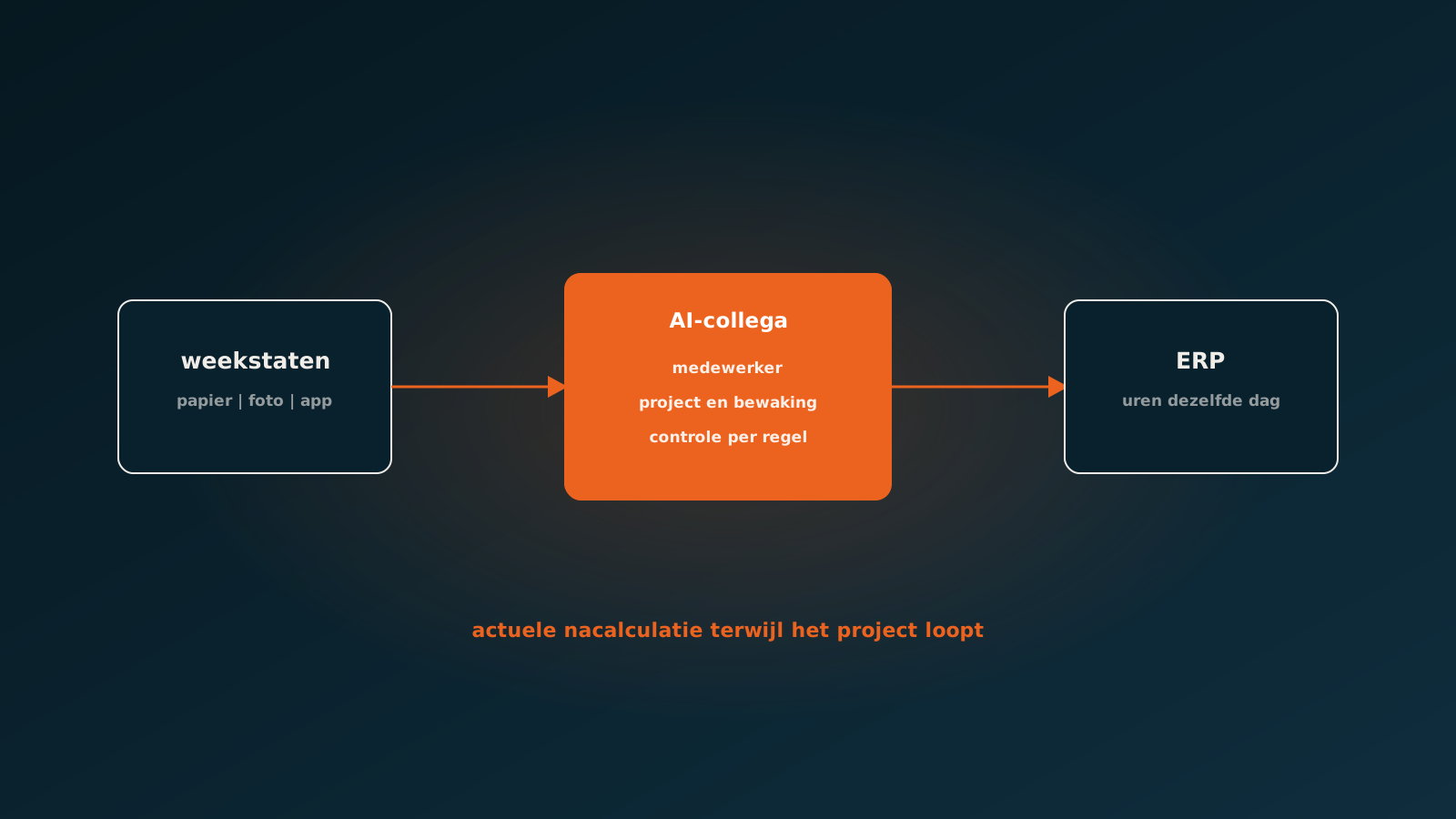
- On time: documents are in the ERP within seconds, not at the end of the week.
- In the right place: hours, materials and invoices on the right project, contract and cost centre.
- Signals: deviations from budget, contract or order surface while the work is still running.
- Oversight: doubtful cases go to a colleague with the reason attached.
Measuring failure costs: three numbers to start with
- How many of last month's job sheets have not been invoiced yet?
- How many days sit on average between the date on the job sheet and processing in the ERP?
- How many credit notes did you issue last year, and why?
Those three numbers usually make the internal conversation concrete in one go.
Run the numbers with the calculator at AgentsLab BouwFrequently asked questions
How high are failure costs in construction?
Dutch construction companies estimate their own failure costs at 5 to 8 percent of the contract sum, often higher (ABN AMRO, Verspilde moeite, 2019). It is an industry range, not an exact figure.
What causes failure costs in construction?
Errors in design and execution, but also incomplete or late information: job sheets that are not invoiced, extra work without approval, hours on the wrong project and reports that reach planning too late.
How do you reduce failure costs in construction?
By getting the information flow in order: every document in the ERP completely, on time and on the right project. An AI coworker processes reports, job sheets, hours and invoices immediately and flags deviations while the work is still running.
How do you make sure extra work gets paid?
Record extra work on the project straight away, with the client's approval. An AI coworker recognises extra work on job sheets and in emails and flags when approval is still missing.
Getting started
Send us ten anonymised job sheets or reports and within a week we show what an AI coworker does with them. An AI coworker is live within eight weeks on average. Plan your go-live whenever it suits you.
Curious what an AI coworker can do for your process?
Book a no-strings Quick Scan and explore the options.
Book a Quick Scan